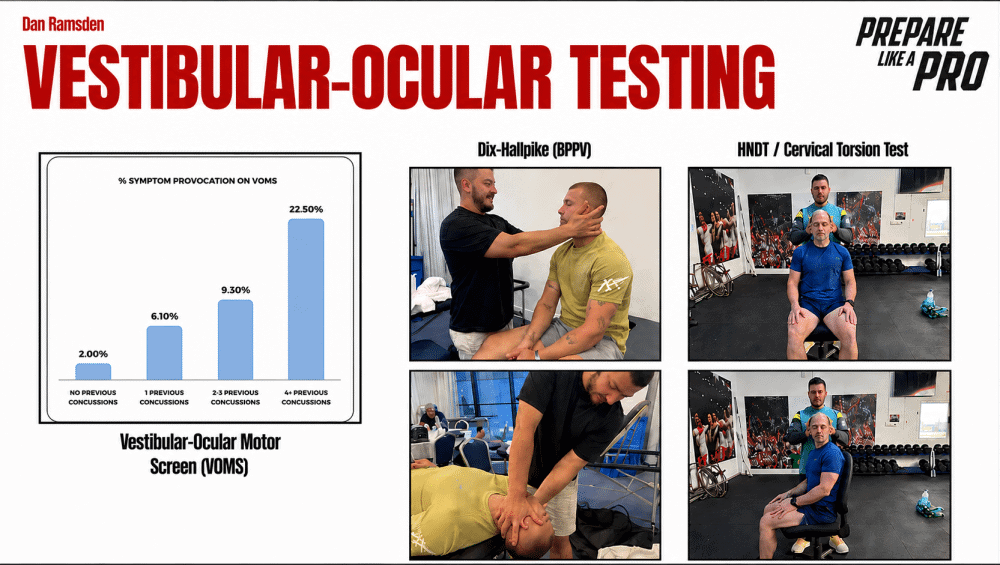
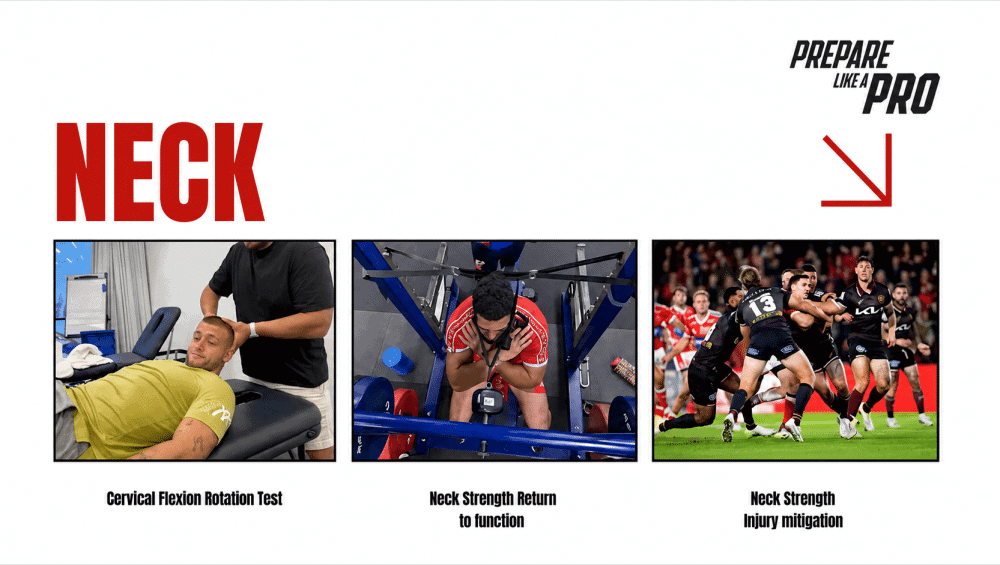
In this episode, we sit down with Dan Ramsden, physiotherapist, researcher and high-performance practitioner, to discuss his groundbreaking work in concussion return-to-performance (RTPf) and the principles behind the concussion recovery. Dan shares insights from his PhD, the limitations of current return-to-play protocols, and why athletes need more than symptom resolution before being considered truly ready for competition. We also explore how the concussion recovery guide aligns with emerging evidence around contact exposure, objective testing, performance readiness, and how high-performance teams can better manage the final stages of concussion rehabilitation.
Concussion Recovery Performance Guide
Why Objective Testing Matters
Concussion management has evolved beyond simply asking athletes how they feel. Today, objective testing provides coaches and practitioners with measurable data that supports safer return-to-play decisions. Instead of relying solely on symptoms, performance markers help identify whether an athlete is truly ready to resume training. As a result, this evidence-based approach reduces uncertainty and improves confidence throughout the recovery process.
Understanding the Hidden Injury Risk
Although many athletes recover well from a concussion, the risk does not end once they are cleared to play. Research suggests that recently concussed athletes have a higher chance of sustaining musculoskeletal injuries because movement mechanics and coordination may still be affected. Therefore, coaches should remain aware of these hidden risks and continue monitoring athletes even after they return to competition.
Building a Smarter Return to Play
Every athlete responds differently to a concussion, making individualized management essential. Rather than drastically reducing workloads, coaches should prioritize consistent communication and gradual progression back to normal training demands. Likewise, exposing athletes to high-speed running, accelerations, decelerations, and controlled contact prepares them for the physical demands of competition. This progressive approach helps rebuild confidence while reducing the likelihood of future injuries.
Using AI to Support Better Decisions
Artificial intelligence is becoming a valuable tool in high-performance sport. However, it should enhance professional decision-making instead of replacing it. Coaches should use trusted data, establish clear guidelines, and verify every recommendation before applying it in practice. Ultimately, combining objective testing, individualized athlete care, and responsible AI usage creates a more effective and safer performance environment.
🔑Highlights from the episode:
– The biggest concussion misconception coaches have right now
– Why contact exposure alone doesn’t prevent injury in athletes
– How objective testing reveals what eye tests miss
– The surprising injury risk post-concussion recovery
– Why AI data sources matter more than the AI itself
🎥 Watch full episode on YouTube
🔗 https://www.youtube.com/@preparelikeapro
📅 Book a FREE discovery call for coaches
👉 https://calendly.com/plp2
Are you ready to enhance your coaching? Uncover the strategies to build a thriving online platform, liberating yourself from the time-for-money constraints while pursuing a career as an AFL S&C coach.
Book a FREE coaches discovery call
https://calendly.com/plp2/15min