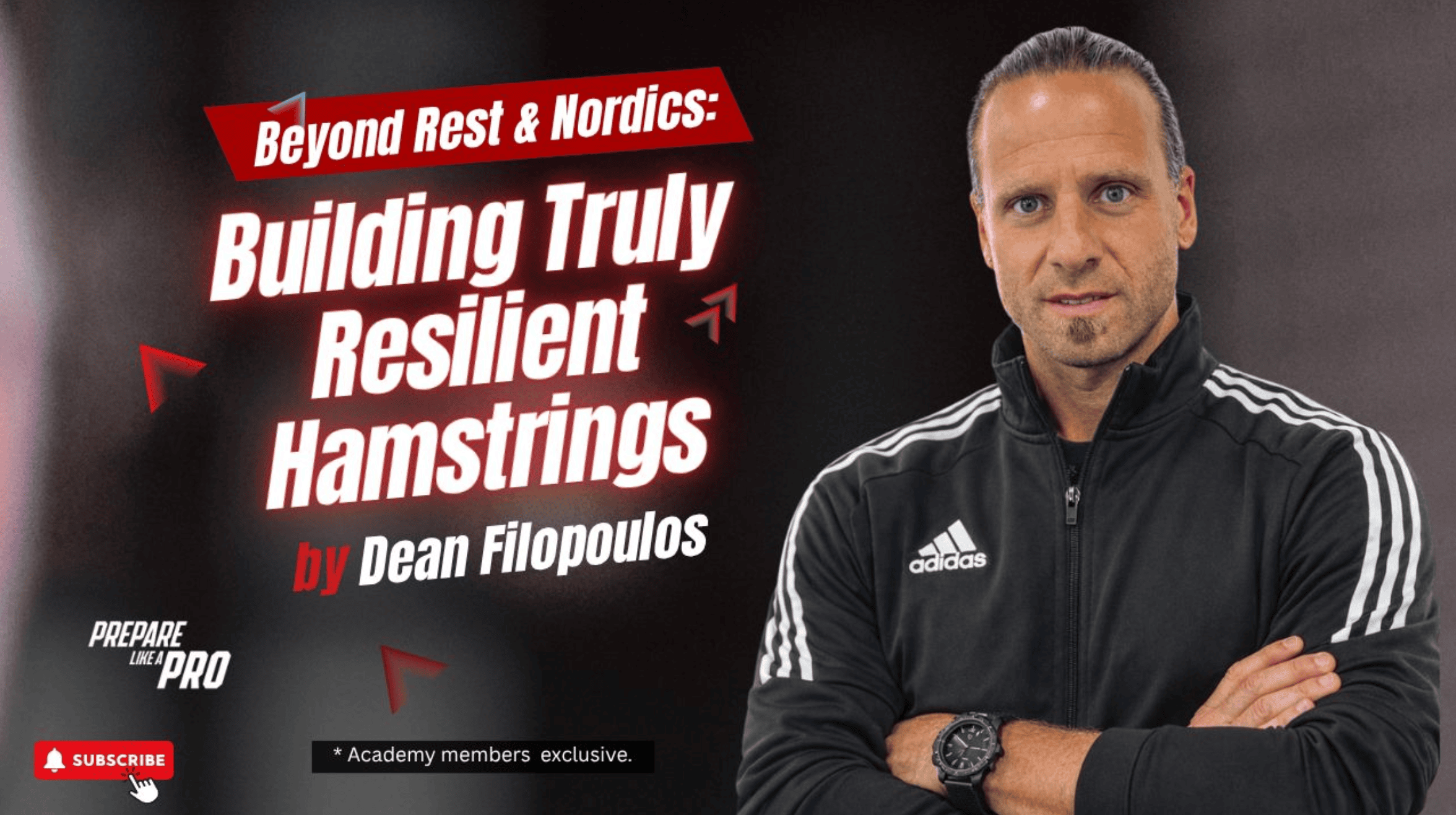
What if the hamstring exercise you’ve been debating doesn’t actually matter? In this discussion on Resilient Hamstring Training Methods, Dean walks through a four-phase reconditioning framework built from years inside a professional AFL club, covering the movement and coordination factors coaches often miss, why stimulus matters more than exercise selection, and what two research studies revealed about Nordics versus the K-box and their surprising effects on acceleration and max velocity. Through these Resilient Hamstring Training Methods, he also highlights how coaches can better align rehabilitation and performance outcomes by focusing on adaptable loading strategies rather than chasing a single “best” exercise.
Resilient Hamstring Training Methods
Understanding Modern Hamstring Injuries
Hamstring injuries are one of the most common problems in elite sport, especially in football and sprint-based games. According to Dean Filopoulos, most injuries happen during high-speed running, acceleration, or sudden direction changes. However, simple movements like kicking or bending to pick up a ball can also place athletes at risk. As game intensity continues to rise, athletes must prepare their bodies for faster and more explosive demands.
Why Rehabilitation Needs Structure
Effective hamstring rehabilitation is not only about reducing pain. Instead, athletes need a structured process that rebuilds strength, movement quality, and confidence. Filopoulos explains that recovery should progress through four stages: strength development, tissue remodeling, movement coordination, and finally speed and game readiness. As a result, athletes are more prepared to return safely to competition.
The Importance of Full Body Movement
Interestingly, hamstring injuries are rarely isolated problems. Weakness or poor movement patterns in the hips, trunk, or lower body can increase strain on the hamstrings. Therefore, coaches and therapists should assess the entire movement chain. A holistic approach not only improves performance but also reduces the likelihood of reinjury.
Smart Training Builds Resilience
Exercises such as Nordic curls, sliders, and eccentric leg curls are commonly used because they improve hamstring resilience under load. Furthermore, different exercises create different adaptations. Nordic exercises may improve acceleration, while hip dominant movements like RDL variations can support top speed running. Consequently, training programs should match the athlete’s performance demands.
🔑Highlights from the episode:
– The most common hamstring injury mechanism in AFL
– The four phases of hamstring reconditioning explained
– How collaboration between physios and S&C shapes outcomes
– Why exercise selection is the wrong question to ask
– What the Nordic versus K-box study actually found
🎥 Watch full episode on YouTube
🔗 https://www.youtube.com/@preparelikeapro
📅 Book a FREE discovery call for coaches
👉 https://calendly.com/plp2
Are you ready to enhance your coaching? Uncover the strategies to build a thriving online platform, liberating yourself from the time-for-money constraints while pursuing a career as an AFL S&C coach.
Book a FREE coaches discovery call
https://calendly.com/plp2/15min