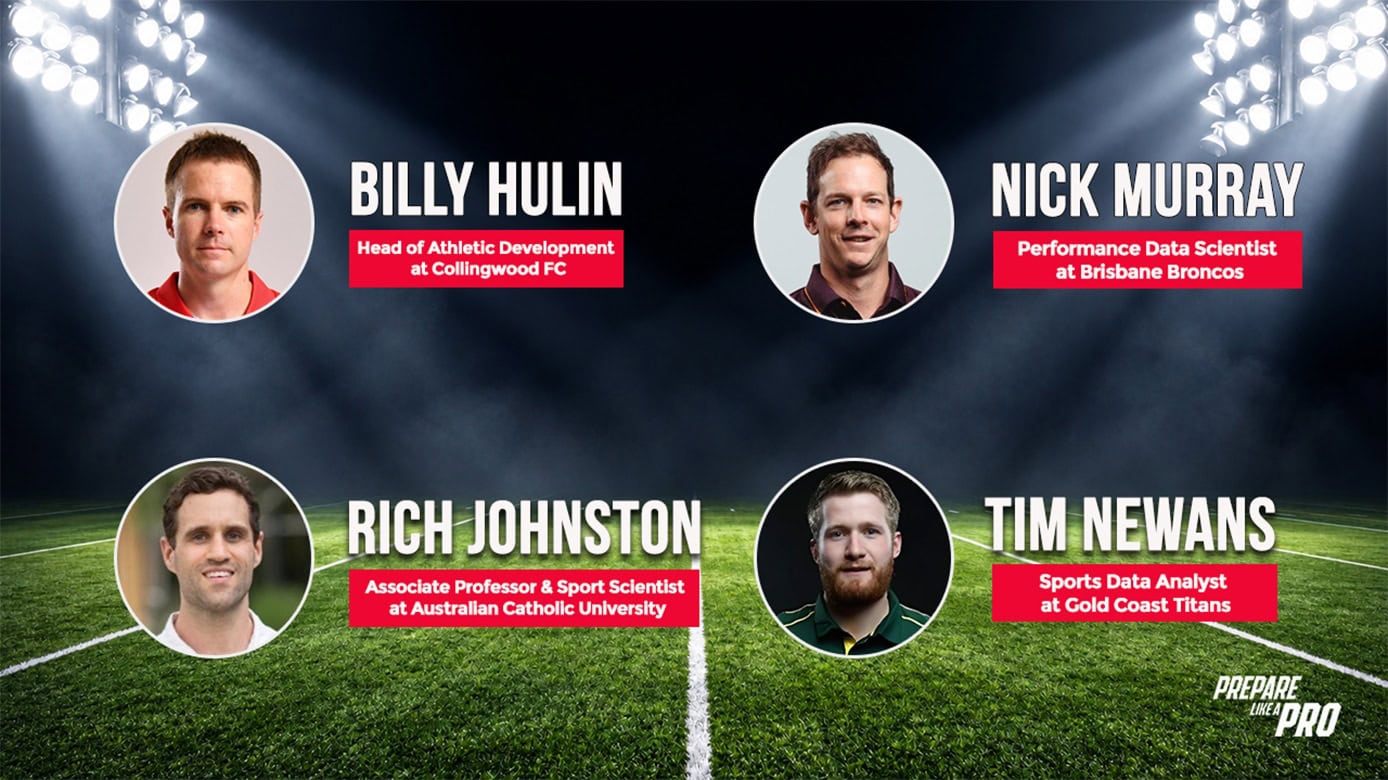
Can AI really replace the human judgment behind elite sport performance? In this panel discussion on AI in Sport Science, practitioners unpack the non-negotiable rule before sending any AI-generated report to a coach, why being upfront about using AI can still cost you trust, and how the best organisations approach AI in Sport Science and AI agents. They also explore how a football club is tackling membership churn, the two data skills every graduate needs first, and where a CEO should really invest: people or technology.
AI in Sport Science
Artificial intelligence is changing how sport science teams work, but its greatest value may be helping practitioners make better decisions. In high performance, speed matters. However, speed without accuracy can create poor decisions, so AI should always sit alongside judgement and context.
Human Judgement Still Matters
For practitioners using AI to create reports, summaries, or insights, human review is essential. Before anything reaches a coach or athlete, check the facts, calculations, and language. AI can confidently produce something that sounds right while still being wrong. Therefore, the practitioner remains responsible for the final message and the decision that follows.
Start With the Problem
Start with the problem, not the technology. The strongest applications begin with a clear operational challenge, such as reducing repetitive work. For example, membership churn modelling can identify members who may not renew. From there, teams can segment those members and create targeted interventions.
Build Better Data Foundations
None of this works without data foundations. Consistent collection, valid testing methods, and understood metrics must come first. If the underlying information is unreliable, AI will only process that uncertainty faster. Consequently, sport scientists need to understand how their data is collected, cleaned, manipulated, and interpreted before trusting automated outputs.
Develop Your Data Skills
For emerging practitioners, this creates a valuable opportunity. Learn the fundamentals of data visualization and data manipulation, then use AI to accelerate the work. Turning raw information into a clear story remains a critical skill. Moreover, understanding the calculations behind an insight helps you challenge AI when its answer does not make sense.
People First, Technology Second
Ultimately, the future of sport science is not people versus AI. It is people using AI intelligently. Great practitioners ask better questions, protect data quality, understand performance context, and turn information into action. In the right culture, AI becomes a performance multiplier. Build the people, skills, and culture first, then let technology amplify what your team can achieve.
🔑Highlights from the episode:
– Why sending AI reports straight to coaches will get you in trouble
– Are elite sports teams really using AI agents?
– How a football club uses AI to predict which members won’t renew
– The two data skills every graduate needs before using AI
– Human vs. AI: where should a CEO invest first?
🎥 Watch full episode on YouTube
🔗 https://www.youtube.com/@preparelikeapro
📅 Book a FREE discovery call for coaches
👉 https://calendly.com/plp2
Are you ready to enhance your coaching? Uncover the strategies to build a thriving online platform, liberating yourself from the time-for-money constraints while pursuing a career as an AFL S&C coach.
Book a FREE coaches discovery call
https://calendly.com/plp2/15min