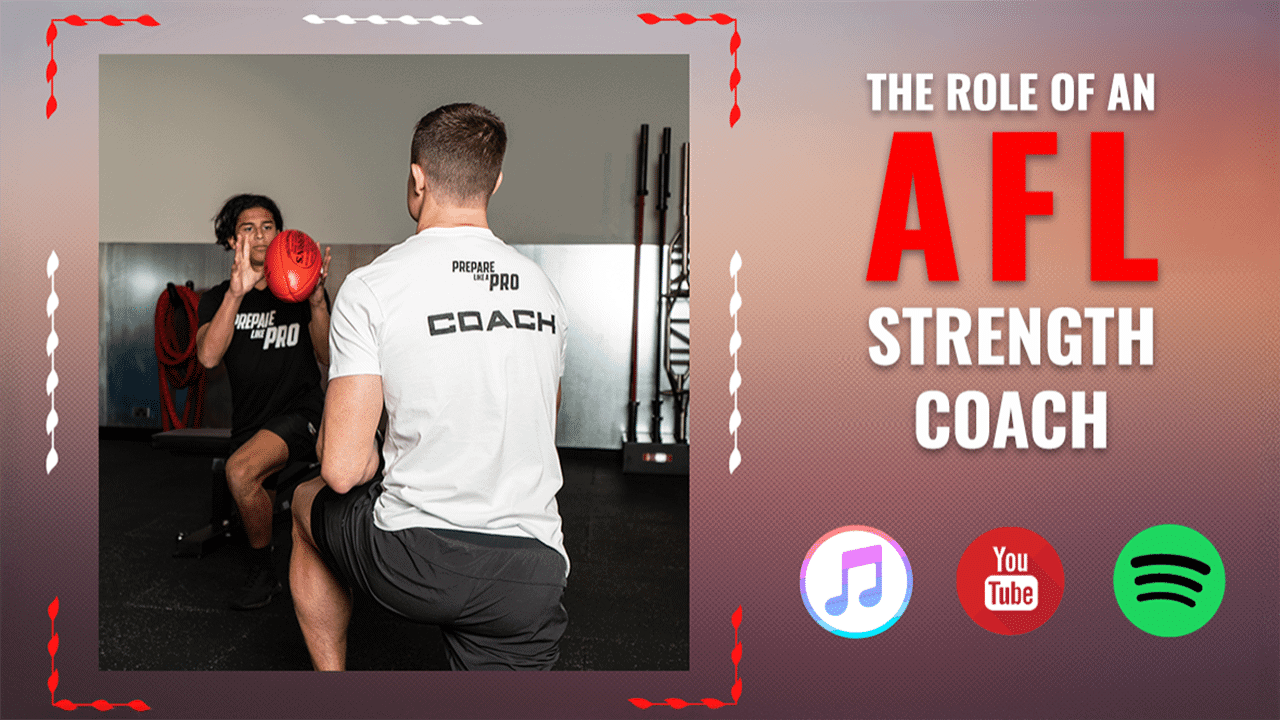
This episode breaks down the four pillars every AFL strength and conditioning coach must master, and it does so by highlighting the AFL Conditioning Coach Role in a real-world, practical way. You’ll hear how elite coaches blend science, timing, relationships, and collaboration to prepare players for the demands of the game while keeping performance and availability at the center of every decision. The AFL Conditioning Coach Role also shows up in how these leaders build physical resilience, guide smart load management, influence lifestyle habits, and support long-term athlete development.
AFL Conditioning Coach Role
Physical Preparation Foundations
AFL Conditioning Coach Role starts with building athletes who can handle the intense physical demands of the game. This means developing strength, power, and the kind of body armor that protects players through constant contact. In practice, coaches focus on speed, agility, and reactive movement when athletes are fresh, allowing them to train with sharp intent and safer mechanics.
Smart Weekly Planning
A big part of the job is placing the right training at the right time. Coaches shape each week around running loads, strength exposure, recovery windows, and even travel stress. As a result, players get the work they need without tipping into unnecessary fatigue. The goal is always steady progress, not random effort.
Data That Drives Decisions
Modern AFL programs rely heavily on sport science. GPS data helps coaches track distance, speed, and high-velocity efforts so players consistently hit exposures that support top-end performance. Although coaches aren’t full-time analysts, they use this information to make smarter choices and adjust training on the fly.
Influencing Lifestyle Habits
Great coaching goes far beyond gym and field sessions. By guiding players toward stronger sleep routines, better nutrition habits, and intentional recovery strategies, coaches help them perform at a higher level across the entire week. Even simple changes like limiting blue light or improving pre-sleep rituals can make a measurable difference.
Individual Programs and Collaboration
Coaches build long-term development plans tailored to each athlete, especially those not yet playing regular games. They also work closely with medical teams to manage injuries, refine reconditioning plans, and reduce the risk of common issues like calf or hamstring strains. Ultimately, this teamwork ensures athletes stay available, prepared, and confident.
Highlights from the episode:
– Why body armor and physical resilience matter
– Sports science and velocity data for smarter load management
– Influencing athlete lifestyle and recovery habits
– Individualisation and collaboration for long-term development
– Difference between personal trainer and strength conditioning coach
Are you ready to enhance your coaching? Uncover the strategies to build a thriving online platform, liberating yourself from the time-for-money constraints while pursuing a career as an AFL S&C coach.
Book a FREE coaches discovery call
https://calendly.com/plp2/15min