AFL Performance Microdosing ModelCategoriesPodcast Strength & Conditioning Coaches Tips

2025 Top 5 Monthly Update Podcast Episodes

In this AFL High Performance Podcast episode, Jack McLean breaks down how the monthly update podcasts were ranked and reveals the Top 5 episodes, based on listener engagement and impact, using insights aligned with the AFL Performance Microdosing Model. You will hear short highlights covering reconditioning after injury, training intent and decision making, in season strength priorities, AFL Combine preparation and developing a clear technical model, all framed through the AFL Performance Microdosing Model. A practical recap packed with lessons, frameworks, and ideas coaches and athletes can apply immediately.

AFL Performance Microdosing Model

AFL High Performance Insights

This blog breaks down the key lessons from the most popular monthly AFL high performance updates of 2025. These episodes resonated because they focused on what actually improves performance on the field, not just what looks good on paper. Above all, the message was clear. Training must serve the game.

Smart Injury Return Planning

Firstly, successful return to play starts with structure. Athletes need clear checkpoints through rehab. Mobility comes first, then strength, and finally sport specific outputs. For example, a hamstring or shoulder injury is not cleared by time alone. Instead, it is cleared by meeting physical standards that support confidence and durability in contact and speed based environments.

Weekly Training Balance

However, performance is not just about rehab. Coaches must constantly decide whether the week is about performing now or building for later. Some athletes need maintenance to stay sharp. Others still need growth. Therefore, microdosing becomes critical. Splitting power, strength, and accessory work across the day allows progress without carrying fatigue into game day.

Body Composition Matters

Meanwhile, body weight remains a common mistake in young athletes. Extra size does not help sprinting, jumping, or endurance testing. Staying at an optimal weight improves efficiency and consistency. At the same time, increasing force output improves every test without compromising movement quality.

Coaching With Intent

Finally, great coaching requires a clear technical model. Without it, drills become random. When coaches know exactly what they are looking for in acceleration and max velocity, sessions become more purposeful. As a result, athletes move better, run faster, and reduce injury risk over the season.

Highlights from the episode:

– Top 5 EP133 – Back on Track: Master The Art of Reconditioning
– Top 4 EP145 – Optimize vs Maximize
– Top 3 EP143 – Strength Tips For Dominating This Season
– Top 2 EP148 – Top 5 AFL Combine Tips
– Top 1 EP146 – Developing Your Technical Model

Listen: iTunes | Spotify

Are you ready to enhance your coaching? Uncover the strategies to build a thriving online platform, liberating yourself from the time-for-money constraints while pursuing a career as an AFL S&C coach.

Book a FREE coaches discovery call

https://calendly.com/plp2/15min

AFL High-Performance InsightsCategoriesPodcast Strength & Conditioning Coaches Tips

2025 Top 10 Most Listened AFL High Performance Episodes

In this special AFL High Performance Podcast episode, Jack McLean shares AFL High-Performance Insights as he reveals the Top 10 most listened episodes of 2025, ranked by first 30-day listener numbers. These AFL High-Performance Insights include short highlights from each episode covering return to play confidence, rehab frameworks, acceleration strategies, tissue loading, mindfulness, breathing, program design, video analysis, season planning, aerobic fitness, and performance focused rehabilitation. A genuine thank you to every guest and listener who made 2025 such a strong year, with reflections, lessons, and ideas to take into 2026.

AFL High-Performance Insights

High Performance Podcast Insights

The 2025 Top 10 Most Listened AFL High Performance episodes reveal what coaches and athletes truly care about. These conversations go beyond theory and focus on what actually works in elite environments. More importantly, they highlight how performance, rehab, and mindset are deeply connected. As a result, the lessons apply not just to AFL but to any high-performance setting.

Injury Rehab and Confidence

One clear theme is that successful rehab is not just physical. Yes, tissues need to heal. However, athletes must also rebuild confidence in game specific movements. For example, exposing players to the exact actions that caused injury helps remove fear and hesitation. Therefore, return to play becomes a performance process rather than a medical checkbox.

Understanding Athlete Movement

Another standout insight is that athletes accelerate differently. Some rely on long powerful strides while others use quick turnover and short contacts. Because of this, forcing one sprint model can limit progress. Instead, great coaches observe, adapt, and train athletes in ways that suit their natural mechanics.

Smarter Training Loads

Injury risk often builds quietly over time. Repeated submaximal stress without enough recovery slowly weakens tissue. Consequently, what once felt easy can suddenly cause breakdown. The best programs manage load with intent, balancing stress and recovery so athletes stay durable across long seasons.

Integration Over Balance

Finally, high performance requires integration, not grinding harder. The Kobe Bryant story reminds us that removing distractions, prioritizing recovery, and using tools like breathing build long term resilience. When work, rest, and mindset align, athletes handle pressure far more effectively.

Highlights from the episode:

– Top 1 Ep#313 Simon Harries – Exclusive Insights on Running Rehab Success
– Top 2 Ep#354 Simon Jones – Why Top Speed Isn’t the Holy Grail
– Top 3 Ep#347 Brett Smith – Tactical Periodisation for Field Sports Explained
– Top 4 Ep#331 Derek Hansen – Enhancing Speed and Efficiency for Athletes
– Top 5 Ep#349 Jared Hoare – How to Maximise Players’ Physical Prep Training
– Top 6 Ep#340 Jon Clarke – The Power of Mindfulness in High Performance Sports
– Top 7 Ep#332 Ted Rath – Living Beyond Comfort Turning Struggles Into Strength
– Top 8 Ep#342 Dr. Thomas Dos’Santos – Unlocking MultiDirectional Speed
– Top 9 Ep#337 James Wild – Acceleration Myths vs Truths What the Science Really Says
– Top 10 Ep#350 Tom Tombleson – Bridging the Gap From Injury to Performance

Listen: iTunes | Spotify

Are you ready to enhance your coaching? Uncover the strategies to build a thriving online platform, liberating yourself from the time-for-money constraints while pursuing a career as an AFL S&C coach.

Book a FREE coaches discovery call
https://calendly.com/plp2/15min

Mindset First Performance ModelCategoriesPodcast Strength & Conditioning Coaches Tips

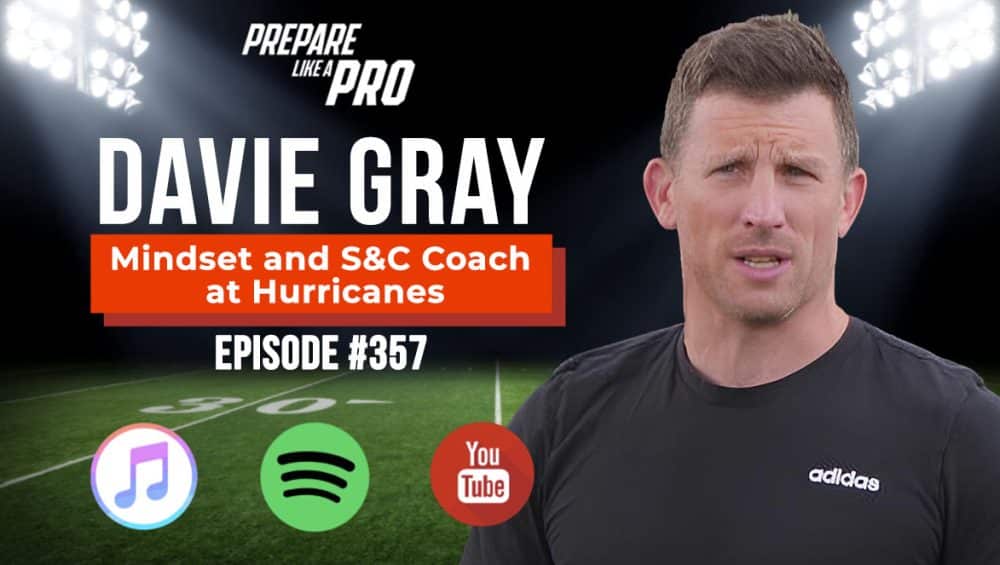
#357 – Davie Gray: Why Mindset Comes Before Metrics in Elite Performance

In this episode, Jack sits down with Davie Gray, a high-performance practitioner whose career has spanned elite rugby with the Hurricanes, national programs, consulting for athletes and business leaders, and a PhD focused on pressure in high-performance environments. Central to the conversation is the Mindset First Performance Model, a framework Davie has lived and refined across elite settings. The Mindset First Performance Model anchors how he thinks about decision making, behaviour, and sustained performance under pressure.

Davie shares how mindset shapes performance, why psychological safety underpins high-performing teams, and how coaches can integrate mindset frameworks into daily practice without adding more load to an already crowded week.

From practical tools to influence behaviour, to creating clarity and trust, to helping athletes thrive under pressure, this episode is packed with actionable insights for AFL staff, S and C coaches, and anyone committed to elevating their coaching craft.

Mindset First Performance Model

Mindset Before Measurement

Elite performance rarely breaks down because of poor data. More often, it unravels because the athlete or coach interprets pressure the wrong way. The best performers see stress as a signal that something meaningful is happening. As a result, they lean in rather than pull back. Therefore, mindset becomes the foundation that all metrics sit on top of.

Stress as a Performance Tool

When pressure rises, the body responds with faster heart rate, adrenaline, and heightened awareness. Instead of labeling this as a problem, high performers reframe it as preparation. Consequently, energy increases, reactions sharpen, and decision making improves. This shift alone can separate those who rise consistently from those who struggle when it matters.

Coaching With Clear Intention

Great coaches design sessions around intention, not just exercises. By deciding whether the goal is learning, challenging, or winning, they shape how athletes think during training. For example, learning environments slow things down and invite questions, while challenge environments demand intensity. As a result, athletes arrive in the right mindset before performance is even tested.

Building Self Awareness Daily

Self-awareness is not built in meetings. It is built in quiet moments. Simple habits like walking without distractions or briefly tuning into the senses help athletes notice thoughts instead of reacting to them. Over time, this awareness improves emotional control under pressure.

Psychological Safety Drives Output

High performance cultures balance high standards with genuine support. Psychological safety does not mean softness. Instead, it means athletes feel safe to speak up, ask questions, and make mistakes while pursuing excellence. When voices go quiet, performance usually follows.

Highlights from the episode:

– Why some performers handle pressure better than others
– How stress mindsets shape performance under pressure
– Embedding learn, challenge, and win mindsets into coaching
– Simple tools to build self-awareness and focus
– The real signs of low psychological safety in teams

Listen: iTunes | Spotify

Are you ready to enhance your game? Our program is designed to propel footballers, like yourself, towards more excellent fitness, speed, and strength, ensuring you’re fully prepared to dominate on the field!

Book a FREE footballer discovery call

at https://calendly.com/plp2/15min

🚀 Ready to level up your gaming skills in record time? Join our exclusive Game Speed Coaching Program today! With personalized coaching, you’ll unlock your full potential and dominate the competition.

🕒 But hurry we’re only accepting 10 participants for this round! Secure your spot now before it’s all gone!

Click here to join and reserve your spot: https://bit.ly/game-speed-coaching-program

Don’t miss this opportunity to take your speed to the next level. Act fast and start your journey towards becoming the fastest player on game day!

Future Sport Science SkillsCategoriesFooty Tips Podcast

#356 – Josh Ruddy Discusses from Data to Decision: How Sport Science Drives AFL Success

In this episode, Jack is joined by Josh Ruddy, a sports scientist with experience across the AFL, EPL, and U.S. college system. Future Sport Science Skills play a central role in the way Josh approaches running exposure, hamstring science, VALD data, coding, and AI-driven workflows. He explains how Future Sport Science Skills are shaping smarter, more individualised decision-making in elite sport through better use of data and technology.

Future Sport Science Skills

The Future of Sport Science Skills

Sport science is moving quickly as clubs lean on data to guide smarter decisions. The next wave of practitioners needs real confidence in working with large data sets. Learning coding skills in R or Python helps turn raw information into insights that coaches can use right away. This foundation makes a young coach more adaptable and more valuable inside a high-performance program.

Building Systems That Actually Matter

Technology is everywhere in high performance, yet the best programs choose only what truly affects outcomes. Rather than stacking gadgets, strong environments identify their big priorities and select the tools that support those priorities. This approach cuts through noise and keeps staff focused on decisions that shape performance and availability week to week.

The Power of High-Speed Exposure

High-speed running has become a non-negotiable in modern programs. When athletes repeatedly hit their top velocities, tissues stay prepared for the demands of match play. It also shows staff how well each athlete is coping with their load. Ensuring these exposures happen every week gives coaches a simple but powerful lever to support performance and resilience.

What Muscle Architecture Reveals

Tracking the fascicle length of the biceps femoris long head offers a window into how well the athlete is adapting. Shorter lengths might signal that certain exercises are not giving the intended effect. This helps coaches refine programs rather than simply pushing harder. It is a small detail that can significantly influence injury prevention strategies.

AI As a Coaching Assistant

AI helps coaches reclaim valuable time. Starting dashboards or reports with an AI generated structure means less energy spent on repetitive coding and more energy spent interpreting data. This shift allows coaches to work more closely with performance staff, uncover trends earlier, and improve decision making throughout the season.

Highlights from the episode:

– Why coding is becoming essential in sports science
– The tech an elite AFL club would prioritise with unlimited resources
– The key non-negotiables for reducing soft tissue injuries
– How fascicle length guides smarter program decisions
– How AI is transforming reporting and decision making

Listen: iTunes | Spotify

Are you ready to enhance your game? Our program is designed to propel footballers, like yourself, towards more excellent fitness, speed, and strength, ensuring you’re fully prepared to dominate on the field!

Book a FREE footballer discovery call

at https://calendly.com/plp2/15min

🚀 Ready to level up your gaming skills in record time? Join our exclusive Game Speed Coaching Program today! With personalized coaching, you’ll unlock your full potential and dominate the competition.

🕒 But hurry we’re only accepting 10 participants for this round! Secure your spot now before it’s all gone!

Click here to join and reserve your spot: https://bit.ly/game-speed-coaching-program

Don’t miss this opportunity to take your speed to the next level. Act fast and start your journey towards becoming the fastest player on game day!

Integrated Training TeamworkCategoriesPodcast Strength & Conditioning Coaches Tips

#355 – Ryan Clayton: Breaking Silos & Driving Team Success

This episode breaks down how high-performance teams build a truly integrated model that links the game plan, training design, and physical preparation, using practical examples from the Brumbies system to show how key behaviours like acceleration and post-contact meters are measured and fed back into the program. In doing so, it highlights how Integrated Training Teamwork shapes decision-making across departments and why embracing Integrated Training Teamwork helps coaches avoid siloed thinking while keeping everyone aligned on the same performance goals.

We look at the early signs of silos, the importance of regular alignment and leader vulnerability, how to pick the right number of preseason priorities without diluting progress, what shifts when moving from preseason to in-season integration, and why some traditional army-style camps may not build mental toughness the way many believe.

Building a Stronger Team Through Integration

The heart of any high performing program is simple: everyone needs to move in the same direction. When teams anchor their work to a shared game model, it becomes easier to turn big goals into daily habits. This clarity helps analysts, coaches, and performance staff stay connected and work with purpose.

Staying Focused on What Matters

Teams often try to fix too many things at once, which spreads attention thin. Instead, choosing a few measurable targets like acceleration or post contact meters creates cleaner feedback loops. These focused markers keep players engaged and help staff identify real progress without unnecessary complexity.

Keeping Silos from Forming

Even strong environments can slip into disconnection when communication drops. This is why early alignment meetings matter so much. Leaders who openly admit when messages were unclear make it easier for others to speak up. When everyone feels heard, collaboration becomes more natural and problems surface earlier.

Adjusting Training Across the Season

Preseason is a great time to separate intense days from extensive ones, so players hit distinct physical qualities. As the season begins, shifting toward a more balanced approach helps maintain performance while still protecting recovery. This mix allows teams to keep their speed and sharpness without overloading players.

Rethinking Mental Toughness

Hard experiences do not automatically build resilient athletes. Consistent sleep, solid nutrition, and meaningful connection often have a deeper impact. When development work centers on clarity, leadership, and trust, athletes learn to handle pressure with confidence rather than burnout.

Highlights from the episode:

– How an integrated model truly works
– Why silos appear and how leaders pull teams back together
– Choosing the right number of game model priorities
– How preseason and in-season integration actually differ
– The unpopular belief about army camps and mental toughness

Listen: iTunes | Spotify

Are you ready to enhance your coaching? Uncover the strategies to build a thriving online platform, liberating yourself from the time-for-money constraints while pursuing a career as an AFL S&C coach.

Book a FREE coaches discovery call
https://calendly.com/plp2/15min

Game Speed Training InsightsCategoriesPodcast Strength & Conditioning Coaches Tips

#354 – Simon Jones on Game Speed – Why Top Speed Isn’t the Holy Grail

In this episode, we dive deep into the concept of Game Speed Training Insights, challenging the idea that top speed alone is the ultimate measure of performance. Simon shares his Game Speed Training Insights on why acceleration, deceleration, and movement efficiency under game-specific demands are just as important, if not more so.

Game Speed Training Insights

The Real Meaning of Game Speed

Game speed isn’t just about running fast in a straight line. According to performance coach Simon Jones, true speed is about the ability to repeat explosive efforts consistently throughout a match. While top speed has its place, recovery and aerobic fitness often determine whether an athlete can perform at their peak during key moments.

Why Repeatability Beats Raw Speed

Jones shared a story about an All-Blacks winger who was the fastest sprinter on the team but quickly slowed after several repetitions. Meanwhile, others with slightly slower top speeds maintained better performance over multiple sprints. This highlights the importance of conditioning and recovery in game situations.

Training Beyond Straight-Line Sprinting

Modern field sports demand more than linear speed. Jones recommends incorporating acceleration, deceleration, and change-of-direction drills to replicate the dynamic nature of games. Using short sprint gates, curve sprint tests, and GPS tracking provides coaches with a better picture of real-world performance demands.

Building Deceleration and Control

To improve control, athletes can start with low-impact plyometric drills such as “clock jumps.” These movements focus on body awareness and joint coordination, teaching players how to absorb force safely and efficiently. Over time, these skills enhance agility and injury resilience.

Collaboration for Lasting Performance

Finally, Jones emphasizes the importance of collaboration between coaches and conditioning staff. Integrating game speed development within training schedules not only supports performance but also reduces injury risk. True game speed blends skill, conditioning, and smart programming to create adaptable, resilient athletes.

Highlights from the episode:

– Why the fastest players don’t always perform best
– How testing reveals true game speed potential
– The key to building long-term deceleration ability
– Simple rotational drills that boost multidirectional control
– How to align speed development with coaching priorities

Listen: iTunes | Spotify

Are you ready to enhance your coaching? Uncover the strategies to build a thriving online platform, liberating yourself from the time-for-money constraints while pursuing a career as an AFL S&C coach.

Book a FREE coaches discovery call

https://calendly.com/plp2/15min

From Gym to Game SpeedCategoriesPodcast Strength & Conditioning Coaches Tips

#353 – Spencer Goggin: From Gym to Game Speed Programming

In this episode, I’m joined by Spencer Goggin, a performance coach with a wealth of experience in speed training and athlete development. This conversation delivers valuable Elite Coaching Perspectives for anyone looking to elevate how they connect and communicate with athletes. Spencer unpacks how asking better questions can transform athlete relationships, why From Gym to Game Speed requires a completely different approach to strength and conditioning, and how frameworks like James Wild’s profiling model help individualize speed programs. We also explore more Elite Coaching Perspectives through discussions on hip lock training, rib-pelvis alignment, and the benefits of co-designing sessions with athlete input to reshape communication and performance outcomes insights that perfectly capture what it takes to bridge From Gym to Game Speed in today’s evolving sport environment.

Whether you’re a sport scientist, strength coach, or performance practitioner, this conversation challenges you to think deeper about how you connect, coach, and create lasting impact.

Coaching Beyond the Physical

Spencer Goggin reminds us that great coaching goes far beyond sets and reps. It starts with asking better questions — not surface-level ones, but questions that uncover who the athlete truly is. By taking the time to understand their background, motivations, and mindset, coaches can connect on a deeper level and create trust that accelerates progress.

Building Trust Through Insight

Trust isn’t built by trying to be an athlete’s friend. Instead, it grows through thoughtful conversations and precise feedback delivered at the right moments. Spencer emphasizes that every question should serve a purpose: to help athletes feel seen and supported while ensuring their development aligns with performance goals.

Adapting to the Uncontrollable

When training surfers, Spencer faces an unpredictable environment. Perfect waves might call for a long morning in the water, while poor conditions demand an instant shift to dry-land work. This flexible approach reflects what all high-performance coaches must master — adaptability under changing circumstances.

Individualizing Athlete Profiles

By analyzing acceleration, stride length, and frequency, Spencer classifies athletes into movement types and tailors their strength and resilience training accordingly. This ensures each athlete builds durability in their most vulnerable areas, reducing injuries while enhancing speed and control.

Collaboration and Co-Design

True progress happens when athletes have a voice. Spencer integrates co-design into his sessions, inviting athletes, coaches, and analysts to shape training together. This collective approach not only empowers athletes but also ensures that communication resonates — because how a message is delivered often determines how well it’s received.

Highlights from the episode:

– How better questions transform athlete relationships
– Why surfing challenges traditional strength programs
– Profiling athletes for speed: lessons from James Wild’s framework
– Rib-pelvis connection and the power of hip lock training
– Co-designing sessions: how athlete insights reshape coaching

Listen: iTunes | Spotify

Are you ready to enhance your coaching? Uncover the strategies to build a thriving online platform, liberating yourself from the time-for-money constraints while pursuing a career as an AFL S&C coach.

Book a FREE coaches discovery call
https://calendly.com/plp2/15min

Achilles and Calf RecoveryCategoriesPodcast Strength & Conditioning Coaches Tips

#352 – Colin Griffin: From Achilles and Calf Injury to Reconditioning and Peak Lower-Leg Performance

In this episode, Jack McLean is joined by Colin Griffin to explore the critical role of the lower leg in performance and injury resilience. From Achilles and Calf Recovery to advanced reconditioning strategies, Colin shares his unique expertise from working with elite athletes, including Olympians and AFL footballers. His insights on Achilles and Calf Recovery provide valuable guidance for optimizing rehabilitation and long-term performance outcomes.

Whether you’re an AFL strength & conditioning coach, physiotherapist, or athlete, this episode delivers actionable insights to reduce injury risk and maximize lower-leg performance.

Achilles and Calf Recovery

Rebuilding Strength After Achilles and Calf Injuries

Recovering from an Achilles or calf injury takes more than rest it demands a smart, progressive plan. The foundation lies in reframing your mindset: load is your friend. Instead of fearing movement, learn to reintroduce it gradually. This approach helps the tendon adapt again while restoring trust in your body’s capacity to perform.

Starting from the Right Entry Point

When the issue stems from overuse or poor tissue capacity, it’s time to hit reset. Begin by scaling back activity, then identify a safe entry point to restart loading. Slowly progress from isometric holds to dynamic calf raises. This builds both tolerance and confidence, setting the stage for long-term recovery rather than short-term fixes.

Fixing the Fundamentals in Movement

Many athletes overlook small but crucial details like how their foot contacts the ground during plyometrics. Soft landings and untidy form leak energy and delay healing. By promoting stronger dorsiflexion and active plantarflexion, you’ll create a tighter, more responsive lower-leg system ready for performance demands.

Balancing Muscle Development

Recurrent calf problems often reveal imbalances between the medial and lateral muscle compartments. Paying attention to these differences allows for more precise training. Strengthening the weaker side enhances force distribution and prevents overload on dominant areas, improving stability and resilience.

Precision Loading for Adaptation

High-performance rehab isn’t guesswork—it’s guided by data. Measuring tendon strain ensures you stay in the optimal range for adaptation (around 4.5-6.5%). This precision means every rep counts, helping you rebuild stronger without risking reinjury.

Highlights from the episode:

– The role of fear and perception in injury recovery
– The most overlooked mistakes in calf and plyometric training
– Why calf injuries keep coming back and how to fix them
– Using ultrasound to guide calf and Achilles rehab
– Measuring tendon strain for smarter, individualized loading

Listen: iTunes | Spotify

Are you ready to enhance your coaching? Uncover the strategies to build a thriving online platform, liberating yourself from the time-for-money constraints while pursuing a career as an AFL S&C coach.

Book a FREE coaches discovery call
https://calendly.com/plp2/15min

Submaximal Testing MethodologyCategoriesPodcast Strength & Conditioning Coaches Tips

#351 – Adriano Arguedas Soley Reveals Smarter RTP Solutions with Submaximal Testing

In this episode, Jack McLean sits down with Adriano Arguedas Soley, a performance scientist and PhD researcher, to explore how Submaximal Testing Methodology is reshaping Return to Play (RTP) protocols in elite sport, particularly for AFL coaches, physios, and athletes.

By applying Submaximal Testing Methodology, Adriano highlights how coaches and performance staff can gain deeper insights into athlete readiness without overloading the body during recovery.

Adriano shares insights from his PhD on non-invasive monitoring, discusses the cardiovascular and neuromuscular responses tracked through submax testing, and breaks down practical tools that can help high-performance teams make smarter, safer RTP decisions.

Whether you’re a sports scientist, S&C coach, or athlete, this episode is packed with real-world strategies, research-backed methods, and high-performance insights you can apply immediately.

Submaximal Testing Methodology

Smarter Return-to-Play with Submaximal Testing

Submaximal testing offers a simple yet powerful way to understand how an athlete’s body adapts to training. Instead of pushing to exhaustion, this method focuses on how efficiently the body responds under controlled, repeatable conditions. By analyzing heart rate during steady submaximal runs, coaches can track fitness progress and recovery without disrupting training flow.

Why the 3-Minute Test Works

A practical example is the 3-minute run at 13 km/h, where the heart rate is recorded in the final 30 seconds. This short and consistent format provides reliable physiological data over time. Since the test is non-invasive and easy to integrate, it fits seamlessly into any training session, making it perfect for ongoing monitoring during preseason and in-season phases.

The Power of Consistency

Interestingly, the actual speed or distance doesn’t matter as much as consistency. Keeping the same setup each session ensures that any changes in heart rate truly reflect progress or fatigue, rather than random variation. As a rule of thumb, a 3–5% drop-in submaximal heart rate signals a genuine improvement in efficiency and aerobic capacity.

Turning Data into Decisions

Coaches can use this data to adjust training loads, spot early signs of fatigue, and make confident return-to-play decisions. Since heart rate offers objective feedback, it eliminates much of the guesswork and allows performance staff to base their choices on clear physiological evidence rather than subjective perception.

Making It Invisible

One of the smartest approaches is to make testing invisible. Telling athletes, they’re just “going for a jog around the oval” helps remove performance bias. Since heart rate can’t be faked, the results remain honest, giving coaches clear insights into an athlete’s readiness to train or return to play safely.

Highlights from the episode:

– What is submaximal testing
– How Adriano’s 3-minute, 13k/h protocol simplifies monitoring
– Pete Cavanagh’s research about Kenyan runners
– How sub maximal testing can measure improvement in performance
– Tips for coaches to implement an accurate submaximal test

Listen: iTunes | Spotify

Are you ready to enhance your coaching? Uncover the strategies to build a thriving online platform, liberating yourself from the time-for-money constraints while pursuing a career as an AFL S&C coach.

Book a FREE coaches discovery call
https://calendly.com/plp2/15min

High-Performance ReconditioningCategoriesPodcast Strength & Conditioning Coaches Tips

#350 – Tom Tombleson on High Performance Reconditioning

In this episode, we sat down with elite performance coach Tom Tombleson to unpack the often-misunderstood phase of High-Performance Reconditioning. We discussed what really happens between getting medical clearance and being truly ready to play, exploring how to balance risk with performance. Whether you’re an AFL coach, athlete, or part of the support staff, Tom’s insights give a clear look at how to make smarter decisions in that tricky return-to-play window.

High-Performance Reconditioning

The Power of Honest Feedback

In high performance reconditioning, nothing replaces honest feedback. Coaches and players gain the clearest picture when combining their observations with candid input from teammates. This open exchange allows both the physical and emotional realities of recovery to be addressed together.

Confidence Is as Critical as Strength

Reconditioning is not just about repairing the body it is about rebuilding confidence. Athletes must believe in their ability to move without hesitation. A two-week training block before returning to competition provides both physical readiness and mental assurance that they can handle the demands of play.

Testing Movements Under Pressure

One proven approach is “battle testing” the exact movements that caused the injury. For example, if an athlete strained their hamstring while chasing and cutting, they must demonstrate the ability to perform those same actions confidently in practice. This type of preparation ensures athletes return to the field with trust in their body.

Simple Tools for Technical Models

Tracking progress does not require complex systems. In fact, simple video tools like a smartphone are enough to compare post-injury movements to an athlete’s healthy baseline. Consistent reference to a technical model helps identify risks early and keeps reconditioning on track.

Adapting to Athlete Experience

Finally, the reconditioning journey must be tailored to experience level. Younger athletes may need more general strength work and technical guidance, while seasoned professionals often rely on their training history and refined movement patterns. Recognizing these differences is key to long-term success.

Highlights from the episode:

✅ Why mentors shape better coaching decisions
✅ How to identify when an athlete is performance ready
✅ How he measures his technical model
✅ Exercise for hamstring strain
✅ How RTP differs for development athlete’s vs elite professionals

Listen: iTunes | Spotify

Are you ready to enhance your coaching? Uncover the strategies to build a thriving online platform, liberating yourself from the time-for-money constraints while pursuing a career as an AFL S&C coach.

Book a FREE coaches discovery call
https://calendly.com/plp2/15min