Stronger Injury Free HamstringsCategoriesFooty Tips Podcast

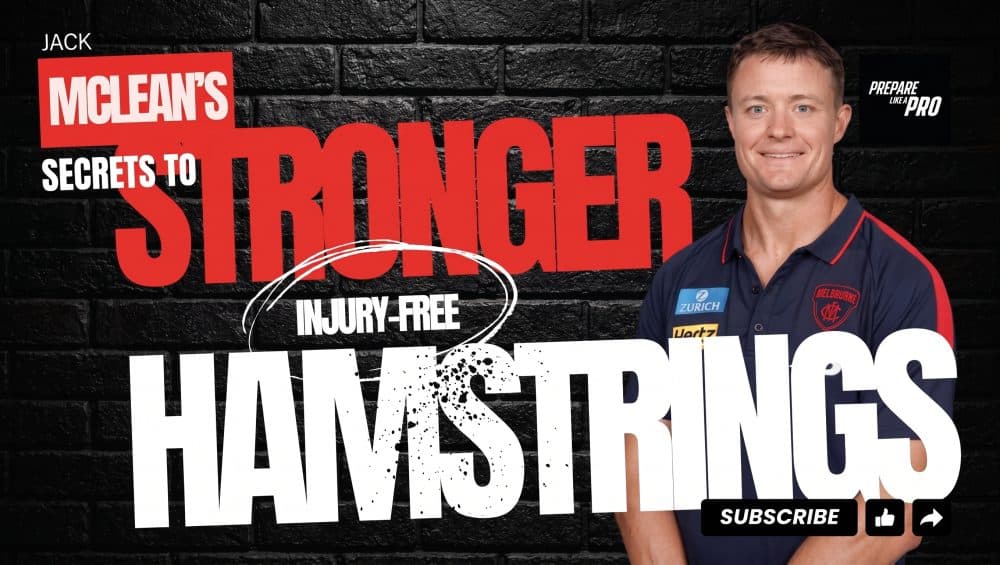
#177 – Jack McLean’s Secrets to Stronger, Injury-Free Hamstrings

Why do hamstring strains keep sidelining athletes, even in well-run programs? In this episode, we break down the risk factors you can actually control and the ones you can’t, with a focus on building Stronger Injury Free Hamstrings through smarter, more complete training. We’ll explore why the knee shouldn’t get all the attention in your strength work, how chaotic contest moments expose gaps that training often misses, and what it really takes to develop Stronger Injury Free Hamstrings. We also unpack why max velocity sprinting is only part of the picture, the simple test that reveals a quality hip hinge, and the strength benchmarks worth chasing on the Nordic and RDL.

Stronger Injury Free Hamstrings

Eccentric strength builds resilience

First, keep eccentric hamstring work in the program all year. Nordics, RDLs, and lengthened hamstring exercises teach athletes to absorb force while the muscle is under tension. This matters for sprinting, jumping, and high-speed actions. Rather than treating hamstring work as preseason, build it consistently and progress the load.

Let the hamstrings work naturally

Next, remember that athletes do much more than bend the knee. They hinge at the hips, rotate, lean forward, and react when contact changes their position. Therefore, include hip dominant and rotational exercises. These patterns help athletes stay comfortable when forced into unfamiliar positions during competition.

Prepare for real speed

Also, do not make maximum velocity the only speed target. Start with short accelerations, then progress toward longer sprints, curved running, reactive drills, and resisted efforts. By building exposure gradually, you give the hamstrings time to adapt to speeds without chasing all out efforts.

Strength needs control

Furthermore, numbers alone do not tell the story. Watch how an athlete moves. Can they hinge without losing spinal position? Can they control their pelvis? Can they stay balanced on one leg? A single leg lateral landmine can reveal whether strength is supported by movement control.

Make strength useful

Finally, strength matters most when athletes can use it under pressure. Benchmarks can guide training, but they should never replace good technique. Athletes should be able to absorb force, control body, and produce force confidently when sprinting, changing direction, or competing.

Highlights of the episode:

– The hamstring risk factors you can actually control
– The importance of resilience beyond just loading the knee
– Why different types of exposure matter beyond sprinting
– The movement competency marker most coaches can’t measure
– How much strength is enough for injury-free hamstrings?

🎥 Watch full episode on YouTube
🔗 https://www.youtube.com/@preparelikeapro
📅 Book a FREE discovery calls for coaches
👉 https://calendly.com/plp2

Listen Now & Subscribe!

🎧 Available on Spotify, Apple Podcasts, and YouTube
📲 Follow us on Instagram: @preparelikeapro
💡 Learn more at preparelikeapro.com

Listen: iTunes | Spotify

Book a FREE Coaching Discovery Call: https://scheduler.zoom.us/jack-mclean-wm92x1/15-min-discovery-call

Are you ready to enhance your coaching? Uncover the strategies to build a thriving online platform, liberating yourself from the time-for-money constraints while pursuing a career as an AFL S&C coach.

Book a FREE coaches discovery call
https://calendly.com/plp2/15min

strength and conditioning interviewsCategoriesPodcast Strength & Conditioning Coaches Tips

176 – Inside the Interview Room: How to Nail Your S&C Job Interview

What actually makes a candidate stand out in strength and conditioning interviews when a footy club is deciding who to hire? We break down the experience that matters most early in your career, the uncomfortable question clubs ask when you’ve stayed semi-pro too long, and why storytelling beats reciting your programs every time. We also get into how to prepare for strength and conditioning interviews by building a CV that doesn’t bury your best assets under irrelevant detail, plus the one alignment most candidates forget to check before they walk into the room.

How to Nail Your Strength and Conditioning Job Interview

Experience Builds Confidence

Experience is the foundation of strong strength and conditioning interviews. Clubs are not only looking for qualifications; they want evidence that you have worked with athletes, solved problems, and learned from environments. Therefore, seek opportunities, whether they come through internships, community sport, semi-professional teams, or performance support roles. Each setting gives you a story and helps you explain how you coach.

Show the Impact You Made

Next, move beyond listing responsibilities. Explain what you improved. Perhaps you built a monitoring process, refined a training system, or helped an athlete return to consistent training. Describe the situation, your decisions, and the result. This shows you can make the club better, not simply deliver sessions. If you have managed a program, be ready to explain the systems you developed and why they worked.

Own Your Career Story

Interviewers may ask why you have spent years in semi-professional roles without securing a full-time position. Do not become defensive. Give an honest, confident answer that acknowledges your pathway and highlights what it has taught you. Then explain what makes you different, whether that is your coaching philosophy, process-driven thinking, communication, or ability to build trust across staff.

Prepare for the Club

Before the interview, research the club. Study the job description, understand its values, and identify where your experience fits. Likewise, update your CV so it is concise and relevant. Remove unrelated achievements and highlight the roles, qualifications, and skills that support this opportunity. Networking matters too, because relationships open doors and help you understand what the club needs.

Tell Stories They Remember

Finally, use stories instead of vague claims. For example, if an athlete avoided ice baths, explain how you explored the reason, listened to their concerns, built buy-in, and reached a practical solution. That story reveals judgment, empathy, and problem-solving better than simply describing an ice bath protocol. A clear example helps the panel picture you contributing every day.

Highlights of the episode:

– What actually separates elite candidates from everyone else
– The red flag clubs spot in six years semi pro
– Why clubs ask what makes you world-class
– The CV mistake quietly costing you interviews
– The story panels remember more than your ice bath protocol

🎥 Watch full episode on YouTube
🔗 https://www.youtube.com/@preparelikeapro
📅 Book a FREE discovery calls for coaches
👉 https://calendly.com/plp2

Listen Now & Subscribe!

🎧 Available on Spotify, Apple Podcasts, and YouTube
📲 Follow us on Instagram: @preparelikeapro
💡 Learn more at preparelikeapro.com

Listen: iTunes | Spotify

Are you ready to enhance your coaching? Uncover the strategies to build a thriving online platform, liberating yourself from the time-for-money constraints while pursuing a career as an AFL S&C coach.

Book a FREE coaches discovery call
https://calendly.com/plp2/15min
Field Sport Movement MechanicsCategoriesFooty Tips Podcast

#175 – Common Mistakes in Movement Mechanics for Field Sports (And How to Fix Them)

Could hidden movement mistakes be limiting your speed, agility and durability? We break down the mechanics field-sport athletes often get wrong, from upright running and overstriding to acceleration, cutting and defensive movement.

We also explore practical assessment methods, useful off-season training environments and the drills that can create genuine transfer to competition. Whether you coach AFL players or train for another field sport, this episode will help you view athletic movement through a sharper lens.

Field Sport Movement Mechanics

Build Better Movement Foundations

Strong field sport performance starts with efficient movement mechanics. Athletes must sprint, accelerate, cut, and defend without wasting energy or placing unnecessary stress on their bodies. However, small technical errors can quickly reduce speed and increase injury risk. By understanding field sport movement mechanics, coaches and athletes can build safer, sharper, and more confident movement patterns during training and competition.

Stop Overstriding at Speed

First, avoid overstriding during upright running. When the foot lands too far ahead of the center of mass, the body experiences a braking effect that slows momentum. This position may also place greater stress on the hamstrings. Instead, athletes should aim to land closer beneath the body, creating smoother ground contact, better rhythm, and more efficient forward movement at speed.

Align Your Acceleration Angles

Next, pay attention to acceleration posture. During the first three steps, the shin and torso should generally point at similar angles. This alignment helps athletes project their bodies forward rather than rising too early. A simple side-view video can reveal whether the posture is effective. Coaches can then provide practical cues and drills based on what they observe in training.

Cut and Defend Efficiently

Moreover, field sports demand efficient movement in every direction. Attackers need to step and cut with minimal footwork so they can create space quickly. Meanwhile, defenders must stay low, balanced, and loaded to react or tackle. Timing gates are useful for measuring acceleration, while GPS can support sprint monitoring, although its acceleration data may be less dependable in some situations.

Train, Retest, and Adapt

Finally, the off-season is the ideal time to address movement weaknesses. Bounding, trampoline work, gymnastics, and multidirectional plyometrics can improve reactive strength and body control. Nevertheless, progress requires patience and consistent exposure. Athletes should follow a structured program for at least six weeks before retesting, although eight to ten weeks usually provides enough time for meaningful adaptation and measurable results.

Highlights of the episode:

– Is overstriding putting your hamstrings at risk
– What shin and torso alignment reveals
– Why efficient direction changes demand less footwork
– Are your movement tests giving reliable answers
– The off-season tools most athletes overlook
– How long should a movement training block last

FAQ

Q1. What are the most common movement-mechanics mistakes in field sports?
Common mistakes include overstriding while running, standing upright too early during acceleration, and taking unnecessary steps when changing direction. These errors can reduce speed, waste energy, and increase stress on the muscles and joints.

Q2. How can athletes improve their acceleration and running mechanics?
Athletes should land with their feet closer beneath their body to reduce braking forces. During the first three acceleration steps, the shin and torso should also maintain similar forward angles. Recording athletes from the side can help coaches identify technical problems and provide more effective feedback.

Q3. How long does it take to improve movement mechanics?
Athletes should follow a structured movement program for at least six weeks before retesting. However, eight to ten weeks usually provides enough time to develop meaningful improvements through exercises such as bounding, multidirectional plyometrics, gymnastics, and reactive-strength training.

🎥 Watch full episode on YouTube
🔗 https://www.youtube.com/@preparelikeapro
📅 Book a FREE discovery calls for coaches
👉 https://calendly.com/plp2

Listen Now & Subscribe!

🎧 Available on Spotify, Apple Podcasts, and YouTube
📲 Follow us on Instagram: @preparelikeapro
💡 Learn more at preparelikeapro.com

Listen: iTunes | Spotify

Are you ready to enhance your coaching? Uncover the strategies to build a thriving online platform, liberating yourself from the time-for-money constraints while pursuing a career as an AFL S&C coach.

Book a FREE coaches discovery call at
https://calendly.com/plp2/15min

🚀 Ready to level up your gaming skills in record time? Join our exclusive Game Speed Coaching Program today! With personalized coaching, you’ll unlock your full potential and dominate the competition.

🕒 But hurry we’re only accepting 10 participants for this round! Secure your spot now before it’s all gone!

Click here to join and reserve your spot: https://bit.ly/game-speed-coaching-program

Don’t miss this opportunity to take your speed to the next level. Act fast and start your journey towards becoming the fastest player on game day!

High-Performance Sport CareersCategoriesPodcast Strength & Conditioning Coaches Tips

#174 – Building a Career in High-Performance Sport: Mentorship, Networking & Interviews

What’s the biggest thing holding aspiring practitioners back from the roles they want in High-Performance Sport careers? In this episode, we break down the most common mistakes early-career practitioners make, why mentorship doesn’t have to be formal to be valuable, and what genuine networking looks like versus the moves that come across as cringe. We also get into what actually gets a CV shortlisted, why a personal referral can outweigh a perfect resume, and how bringing real examples into an interview sets candidates apart from everyone else chasing a high-performance sport career.

High-Performance Sport Careers

Start Before You Feel Ready

Building a career in high-performance sport isn’t just about having the right qualifications. It’s about having the confidence to put yourself out there. Talk to practitioners, attend conferences, join conversations, and ask thoughtful questions. You don’t need to know everything before you start building relationships. In fact, curiosity and a willingness to learn can be one of your greatest strengths.

Build Genuine Relationships

Networking works best when it feels human. Instead of jumping straight to asking someone for a job, a favour, or a coffee chat, focus first on creating a genuine connection. Show interest in their work, share ideas, and look for ways to contribute. Glasp makes a similar point: effective networking is about authentic, long-term relationships, not transactions.

Learn From the People Around You

Mentorship can be much simpler than people think. You don’t necessarily need a formal mentor or a paid programme. Sometimes the best learning comes from simply watching experienced practitioners work, asking questions, and understanding how they approach difficult situations. Mentorship, in whatever form it takes, can offer feedback, accountability, and perspective as you develop professionally.

Make Your Experience Stand Out

When an opportunity comes along, your CV matters, but relationships can make the real difference. A recommendation from someone who knows your work and is trusted by the hiring panel can help you stand out. But getting shortlisted is only the first step. Being able to clearly explain what you’ve actually done is what separates you from another candidate with similar qualifications.

Tell Stories, Not Just Answers

In interviews, avoid simply explaining what you would do. Instead, bring your experience to life. Talk about a challenging athlete, a difficult performance problem, or a moment where communication really mattered. Explain what happened, what you did, why you made that decision, and what you learned. In the end, your experiences tell people far more about your readiness than any list of qualifications ever could.

Highlights of the episode:

– The number one mistake holding back aspiring practitioners
– Why mentorship doesn’t need to be formal to work
– The cringe networking move everyone should avoid
– Why a personal call beats a perfect CV every time
– Why real examples win you the interview

FAQ

Q1: What can mentorship do for your high-performance sports career?
A strong mentor can offer practical guidance, honest feedback, career advice, and valuable industry connections. Choosing someone whose experience aligns with your goals can help you navigate challenges and accelerate your professional growth.

Q2: Can networking really help you land a job in elite sport?
Absolutely. Building genuine relationships with coaches, mentors, peers, and industry professionals can uncover opportunities that aren’t publicly advertised. Conferences, workshops, professional organizations, and social platforms are all effective ways to expand your network and strengthen your reputation.

Q3: How can you make yourself stand out in a high-performance sports interview?
Research the club thoroughly, understand its culture and training philosophy, and prepare specific examples that demonstrate your practical experience and impact. It also helps to practice your responses and prepare thoughtful questions that show genuine interest in the organization and the role.

🎥 Watch full episode on YouTube
🔗 https://www.youtube.com/@preparelikeapro
📅 Book a FREE discovery calls for coaches
👉 https://calendly.com/plp2

Listen Now & Subscribe!

🎧 Available on Spotify, Apple Podcasts, and YouTube
📲 Follow us on Instagram: @preparelikeapro
💡 Learn more at preparelikeapro.com

Listen: iTunes | Spotify

Are you ready to enhance your coaching? Uncover the strategies to build a thriving online platform, liberating yourself from the time-for-money constraints while pursuing a career as an AFL S&C coach.

Book a FREE coaches discovery call
https://calendly.com/plp2/15min