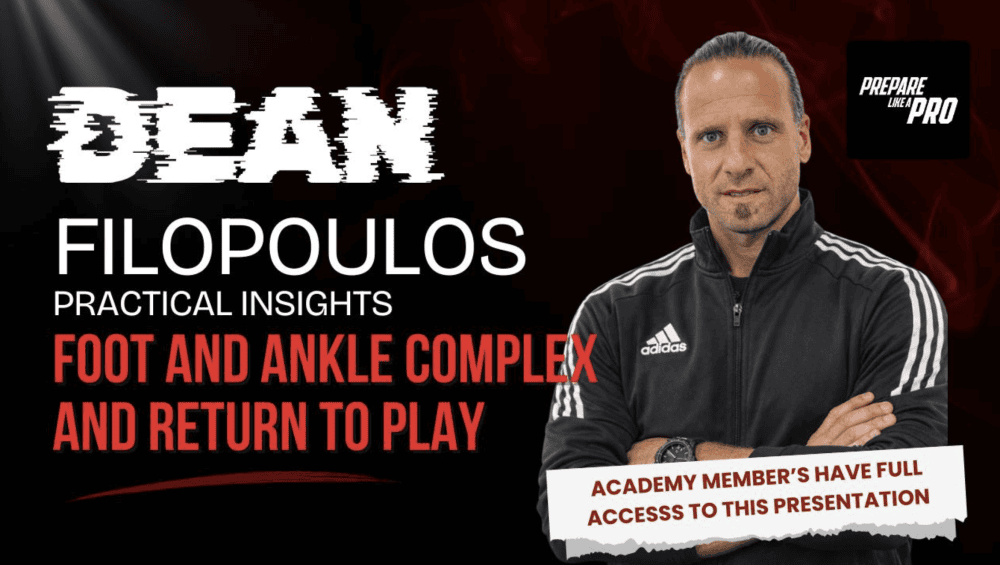
AFL High Performance & Reconditioning Insights with Dean Filopoulos — Exclusive Academy Webinar
We’re excited to bring you an exclusive professional development opportunity inside the Prepare Like a Pro High Performance Academy — a deep-dive presentation with Dean Filopoulos, one of the most experienced practitioners in Australian football performance and reconditioning.
This session was originally delivered on Friday, 13th March at 1 pm AEST, and is now available on demand for our Coaches Academy members.
Meet Dean Filopoulos
Dean Filopoulos is a highly respected performance and reconditioning specialist with extensive experience operating inside elite Australian football environments. He spent 14 years at the Collingwood Football Club, where he held multiple key roles across performance systems, including Reconditioning Manager and leadership positions within high-performance operations.
Before progressing through the AFL system, Dean completed a Master’s degree and worked across a number of NAB League football programs, building a practical foundation in athlete development, rehabilitation, and strength & conditioning.
His career has spanned roles from VFL High Performance Manager to coordinating strength, conditioning, and return-to-play strategies that supported elite footballers throughout long and demanding seasons. Dean’s experience blends academic knowledge with real-world application, making him a trusted voice in performance communities.
AFL Coaching Education
Elite AFL coaching education is no longer just about experience on the field — it’s about evidence‑based decision making, athlete‑centred development, and high‑performance systems that consistently deliver results.
At Prepare Like a Pro, our AFL Coaching Education content is designed to support:
AFL & VFL coaches
Community and academy coaches
Strength & conditioning coaches
High‑performance and development staff
Whether you’re coaching juniors, community football, state leagues, or working toward elite pathways, this hub brings together practical insights, modern coaching frameworks, and real‑world lessons from AFL environments.
High‑Performance Coaching Principles
Translating sport science into on‑field outcomes
Creating training environments that enhance learning and buy‑in
Coaching decision‑making under pressure
Strength & Conditioning for AFL
AFL‑specific strength, speed, and power development
In‑season vs pre‑season programming strategies
Managing training loads to reduce injury risk and improve availability
Return to Play & Athlete Durability
Best‑practice return‑to‑play frameworks
Managing soft‑tissue injuries and reconditioning
Collaboration between coaches, S&C, and medical staff
Athlete Development Pathways
Long‑term athlete development for youth footballers
Bridging the gap from community to state and AFL level
Coaching strategies that scale with athlete maturity
Learn From AFL Practitioners, Not Just Theory
Our AFL coaching education content features experienced practitioners working in elite football environments, including:
AFL & VFL strength and conditioning coaches
Senior and development coaches
Sport scientists, physiotherapists, and performance specialists
Every article is built around practical application, so you can confidently implement ideas into your weekly coaching plan.
Who This Academy Education Is For
✅ Coaches looking to modernise their training approach
✅ Strength & conditioning coaches working in football
✅ Coaches preparing athletes for higher levels of competition
✅ Practitioners who value data, clarity, and simplicity
If your goal is to coach smarter, develop better athletes, and stay aligned with AFL standards, you’re in the right place.
Take the Next Step in Your Coaching Development
In this in-depth presentation, Dean shares applied insights based on his extensive work inside one of the AFL’s top clubs. He covers:
Reconditioning frameworks used in AFL environments
Return-to-play strategies for elite footballers
Best practice integration of performance, medical, and coaching departments
Managing athlete progression over the course of a long season
Practical lessons and real-world examples from over a decade in professional sport
Whether you’re a strength & conditioning coach, reconditioning professional, high-performance manager, or pathway coach, this session provides actionable frameworks you can adapt to your environment.
Why This Matters
Balancing high-performance demands with athlete welfare, injury prevention, and optimal return-to-play outcomes remains one of the biggest challenges in elite sport. Learning directly from someone who has designed and delivered these systems at the highest level gives you a major advantage — not just in theory, but in practical execution.
Watch Inside the Academy
This presentation is available exclusively to members of the Prepare Like a Pro High Performance Academy. If you’re serious about refining your systems and strengthening your processes, log in now and check it out.
Staying current with the latest research is crucial for being an effective strength and conditioning (S&C) coach, especially in elite sports like the Australian Football League (AFL). Applied sport science is evolving rapidly, and new research findings emerge almost monthly, shaping how professionals approach athlete training, injury prevention, and performance optimisation. As a Strength and Conditioning coach for an AFL team, I’ve observed the direct impact that research-backed strategies can have on enhancing athlete performance and reducing the risk of injuries.
For coaches who work in high-performance environments, whether within AFL teams or other elite sports contexts, relying on outdated methods simply isn’t an option. From refining periodisation models to perfecting recovery strategies, the latest research forms the backbone of every successful training program. This post will dive into why it’s so critical for S&C coaches to stay updated, outline the emerging trends in applied sport science, and explain how coaches can seamlessly incorporate new findings into their day-to-day practice.
Why Staying Updated in Strength & Conditioning Matters
The strength and conditioning industry is one of the most dynamic fields within sports science. Every few years, new paradigms shift the way we view physical preparation and athlete management. For S&C coaches operating at the highest levels, staying updated is more than recommended—it’s essential. Coaches who understand and apply the latest research are better equipped to design effective training programs, justify their decisions to stakeholders, and gain a competitive edge.
Here’s why staying current matters:
Evidence-Based Practice: Evidence-based practice involves using scientific research to support training decisions, thus minimising guesswork and ensuring that methods are effective and reliable. Whether it’s adjusting load management or refining running technique, decisions should be data-driven. This also makes it easier to communicate the rationale behind training interventions to athletes, fellow coaches, and stakeholders.
Competitive Advantage: In elite sports like the AFL, where the difference between winning and losing can be minimal, being one step ahead with cutting-edge research is crucial. Coaches who incorporate the latest findings into their programs have a tangible advantage over those who rely on outdated practices.
Preventing Injuries: New research often brings better insights into preventing common injuries, a top priority for every coach. By adopting evidence-based injury prevention strategies, S&C coaches can significantly reduce the likelihood of soft-tissue injuries, which are prevalent in AFL due to the high-speed nature of the game.
Optimising Performance: Research-backed training can optimise both physical and mental performance. For example, recent findings on periodisation models can help coaches structure training phases to peak at the right time, ensuring athletes are in top form when it matters most.
Key Areas Where Research Shapes Strength & Conditioning
Research is the foundation of high-performance training. From understanding the nuances of load management to using biomechanics to refine movement patterns, studies offer insights that can shape every aspect of an athlete’s development. Here are some of the core areas where research has had a significant impact:
Load Management
Load management is one of the most researched topics in sports science today. It involves balancing the stress placed on athletes during training and competition with adequate recovery to avoid overtraining and injury. One of the most influential concepts in this area is the Acute to Chronic Workload Ratio (ACWR). This metric compares an athlete’s current training load to their long-term load, helping coaches determine whether an athlete is at risk of overuse injuries.
By tracking ACWR, S&C coaches can adjust training volumes to maintain athletes in an optimal training zone. The research shows that sudden spikes in load are linked to a higher risk of injury, making it vital for coaches to plan progressive load increases over time.
Biomechanics and Movement Analysis
Biomechanics plays a crucial role in refining an athlete’s technique, minimising the risk of injury, and enhancing performance. Motion analysis, for example, allows S&C coaches to break down the mechanics of a sprint, jump, or tackle. By understanding these movements at a granular level, coaches can make precise adjustments to improve efficiency and reduce injury risk.
For AFL athletes, biomechanics is particularly useful for refining sprinting mechanics. Studies on sprint biomechanics can be directly applied to improve running technique, thus reducing the incidence of soft-tissue injuries like hamstring strains. Incorporating biomechanical principles into regular training can help athletes optimise their movement patterns, making them faster, more agile, and less prone to injury.
Nutrition and Recovery Science
Nutrition and recovery are critical components of any high-performance training program. Recent research has shed light on the specific dietary needs of elite athletes, with recommendations tailored to different phases of training and competition. For example, a high-protein diet is beneficial for muscle recovery and adaptation, while carbohydrate intake is crucial for fuelling high-intensity efforts.
Similarly, studies have shown that recovery strategies such as cold-water immersion and sleep optimisation can significantly enhance an athlete’s readiness for the next training session or match. Coaches who integrate these research-backed strategies into their programs are better equipped to maintain athlete health and maximise performance throughout the season.
Strength Training Methods
Strength training is a cornerstone of physical preparation in AFL. Recent research has highlighted the effectiveness of Velocity-Based Training (VBT) for individualising strength programs. VBT involves using bar speed to gauge an athlete’s readiness and adjust training loads accordingly. By focusing on movement speed rather than just load, coaches can ensure that athletes are training at the right intensity to develop power and strength without overtraining.
Studies have shown that VBT can help athletes make more consistent gains in power development compared to traditional percentage-based methods. This approach is particularly useful for AFL players, who need to balance maximal strength with speed and agility.
Emerging Trends in Applied Sport Science
As sport science continues to evolve, new methodologies and technologies are being introduced every year. Here are some of the most promising trends shaping the future of strength and conditioning:
Wearable Technology
Wearable devices like GPS trackers, heart rate monitors, and inertial measurement units provide coaches with real-time data on athlete workload and readiness. By tracking metrics such as distance covered, sprint intensity, and heart rate variability, coaches can gain deeper insights into an athlete’s performance and make more informed decisions about training loads and recovery needs.
Data Analytics
The advent of sophisticated data analytics tools has transformed how coaches interpret performance data. Advanced software platforms can analyse large datasets to identify trends and correlations that might not be visible to the naked eye. For example, by analysing game data alongside training loads, coaches can develop more precise conditioning protocols that target specific performance attributes.
Athlete Monitoring Systems
Integrated athlete monitoring systems allow coaches to track multiple aspects of an athlete’s performance, including workload, fatigue levels, and wellness. This holistic approach provides a complete picture of an athlete’s readiness and can be used to fine-tune training loads, reduce injury risk, and optimise performance.
Sports Psychology
The mental aspect of sports performance is gaining increased attention from researchers. Techniques such as mindfulness, visualisation, and goal-setting have been shown to improve focus, reduce anxiety, and enhance performance under pressure. By incorporating sports psychology strategies into training programs, coaches can help athletes develop mental resilience and maintain high performance in high-pressure situations.
Best Practices for Applying Research in Real-World Settings
Knowing the latest research is one thing; applying it effectively is another. Translating research findings into practical coaching strategies requires a nuanced understanding of the sport’s specific demands. For AFL coaches, this means considering factors such as the high-intensity nature of the game, the physical demands of different positions, and the need for both speed and endurance.
Here are some strategies for incorporating research into your practice:
Adapt Findings to Your Context: Research findings are often presented in controlled environments that differ significantly from real-world settings. Before implementing a new method, consider how it fits within your existing program and whether it aligns with the specific needs of your athletes.
Prioritise Athlete Buy-In: Athletes are more likely to engage with new training methods if they understand the rationale behind them. Use evidence-based explanations to communicate the benefits of a new approach and involve athletes in the decision-making process.
Start Small and Measure Impact: When adopting a new research-backed strategy, start with a small group of athletes and track the outcomes. This allows you to refine the approach before rolling it out to the entire team.
Stay Flexible: Just because research supports a particular method doesn’t mean it’s the best fit for every athlete. Be willing to adapt your approach based on feedback and individual responses.
The Role of Online Learning Platforms for High-Performance Staff
Online learning platforms have revolutionised professional development in the S&C field. They offer coaches and sport scientists the flexibility to study the latest research, engage in professional discussions, and earn certifications without disrupting their day-to-day responsibilities. This accessibility makes it easier for high-performance staff to stay updated on new trends and incorporate cutting-edge knowledge into their practice.
Some of the key benefits of online learning include:
Accessibility: Study from anywhere at any time, making it easier to fit professional development into a busy coaching schedule.
Diverse Topics: Explore niche subjects not typically covered in formal education, such as advanced biomechanics or sports psychology.
Network Building: Connect with like-minded professionals from around the world, share insights, and learn from others’ experiences.
Overcoming Challenges in Staying Up-to-Date
While staying informed is crucial, it’s not always easy. Common barriers include:
Information Overload: The sheer volume of research can be overwhelming, making it difficult to identify which studies are most relevant to your practice.
Time Constraints: Balancing coaching responsibilities with learning can be challenging, especially during the competitive season.
Access Issues: Many peer-reviewed journals are behind paywalls, limiting access to the latest research.
Practical Solutions for Staying Informed
Subscribe to Curated Newsletters: Curated newsletters that summarise the latest research can help streamline the process of staying updated.
Use Research Aggregators: Platforms like ResearchGate and Google Scholar can help you find and organise research articles that are relevant to your field.
Leverage Online Communities: Online forums and social media networks, such as Twitter/X #SportsScience community, offer a platform for sharing the latest research and engaging in professional discussions.
For strength and conditioning coaches in elite sports like AFL, staying updated with the latest research isn’t just beneficial—it’s essential. By incorporating research-backed strategies into your programs, you can enhance athlete performance, reduce injury risk, and maintain a competitive edge. The key is to remain flexible, keep learning, and always look for ways to translate research into practical outcomes that benefit your athletes. As the field of sport science continues to evolve, coaches who stay ahead of the curve will be best positioned to drive success for their teams.
🌟 If you want answers to any of the above questions our High Performance scorecard is for you! 🌟
Are you an aspiring strength & conditioning coach aiming for your first full-time contract in professional sports? We’ve got just the tool to help you map out your path to success!
📈 Introducing the Pro Sport Growth Scorecard! This exclusive, free resource is meticulously designed to assist you in identifying key areas of improvement, setting realistic goals, and strategically advancing toward your career objectives.
Why download the Scorecard?
Targeted Tracking: Monitor your progress in crucial competencies needed for a career in elite sports.
Goal Setting: Define clear, actionable goals that drive you towards your dream job.
Results-Oriented: Focus your efforts on what truly matters to achieve professional growth faster.
Don’t leave your career progression to chance. Take proactive steps to sculpt your future in the elite sporting industry!